

July 26, 2023
Ditch Datasheets with this Flux Copilot Upgrade

Share


Copilot now offers unprecedented precision by incorporating information from datasheets. This enables you to directly utilize the wealth of data often hidden in the layers of these dense technical documents. Here’s some of our favorite use cases:
@copilot What is the power consumption of the ESP32 in sleep mode?
@copilot What's the power-up sequence for the PMIC in U1?
@copilot How do I configure an interrupt on a pin for U4?
@copilot What is the maximum frequency I can reach without an external crystal on U6?
@copilot What are some layout recommendations I need to follow for IC3?
@copilot What’s the voltage range for vddio on U4?
@copilot Can U2 withstand intense operating temperature even without heatsink?
Check out our full list of our favorite Copilot Prompts to get more ideas!
Copilot now gives you more transparency about where it gets its information from. Instead of just giving you an answer, Copilot now cites its sources.
We believe transparency is key to enhancing trust and confidence in AI technologies. Now, when Copilot pulls information from a datasheet it directly cites that source in the response. This feature allows you to verify the accuracy of the information provided, tracing it back to the original context in just a click.
By including the source of information directly in Copilot's response, we provide a clear, traceable path back to the original document. This heightened transparency gives you the confidence to trust Copilot's responses and the ability to dive deeper into the source material whenever you choose.
With this update also comes the ability for Copilot answer questions about how to use Flux by referencing our documentation. So, instead of getting stuck and searching documentation, you can stay in the flow and get the help you need without leaving your project! Now you can ask questions like:
@copilot I want to put custom silkscreen on my PCB. How would I do that?
@copilot I can't find part on the library what do I do?
@copilot How do I start a simulation?
At Flux, our goal has always been to empower the masses by making hardware design more accessible to all. With this newest update to Copilot, you now have greater accuracy, transparency, and control over your AI design assistant, and the sky is the limit!
If you want to learn more about Copilot and how to use it, check out any of these resources:


Whether you're migrating from popular EDA applications or starting fresh, mastering high speed PCB design has never been more intuitive. Flux enables teams to design, simulate, and route with real-time AI assistance, so you can spin your next high-speed board with total confidence.


Now, Flux Copilot can learn how you work—your design principles, part selection preferences, schematic style guidelines, and testing workflows—and remember them automatically.
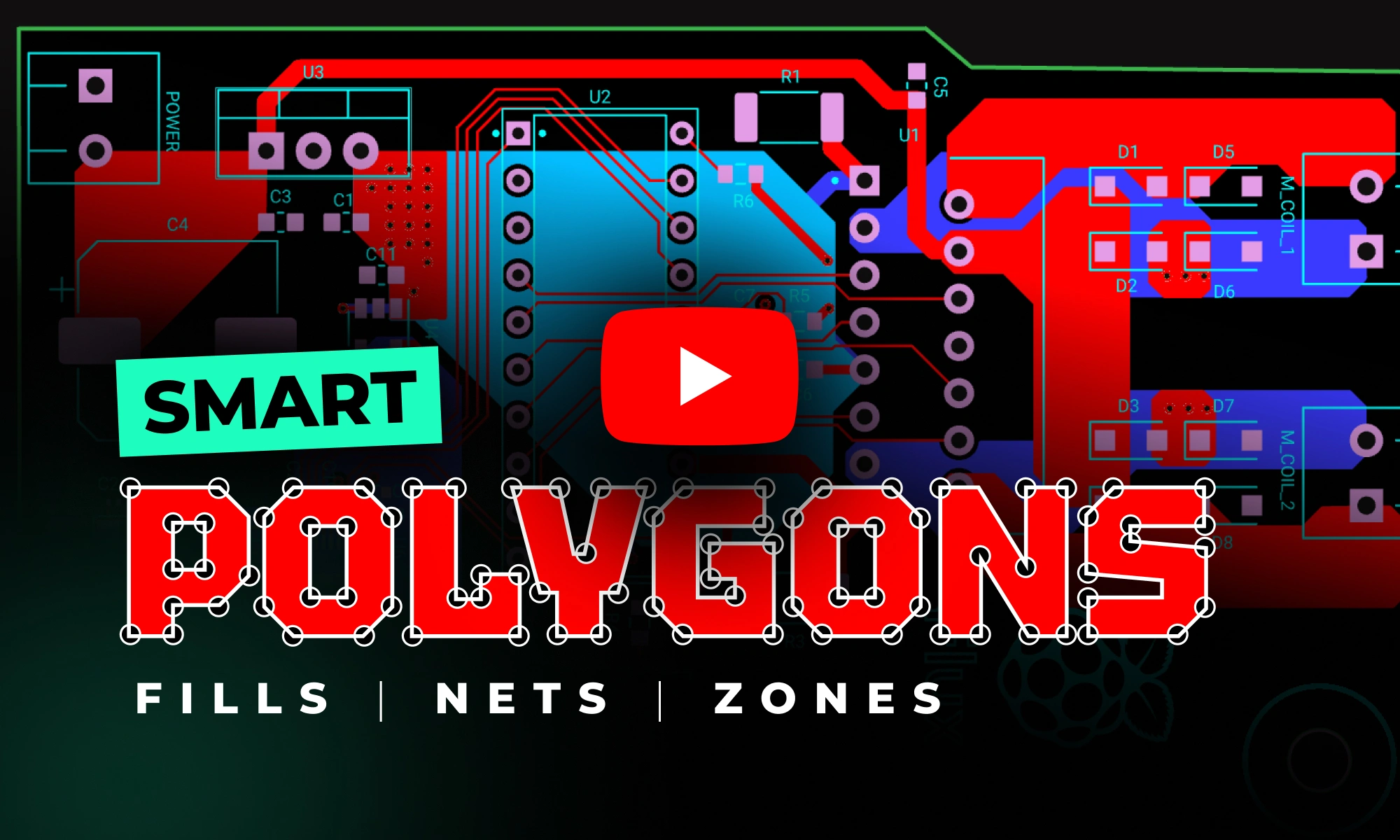
We're excited to unveil our Smart Polygon system in Flux! This powerful capability builds on top of our automatic copper fills to transform how you create and manage custom copper areas in your PCB designs.


With the latest release of Copilot it isn’t just smarter—it’s hands-on, placing components and applying bulk changes to your project instantly. But to get the most out of it, knowing how to craft the right prompt is key.


Creating a manufacturable, error-free PCB is never simple. Every engineer knows that missed details lead to production delays, costly revisions, and project setbacks. But what if you could have the power of a seasoned review team guiding you, 24/7?


If you’re using EasyEDA and are thinking of making the switch to Flux, learn how the two platforms differ and why Flux might be the next step in elevating your PCB design experience.
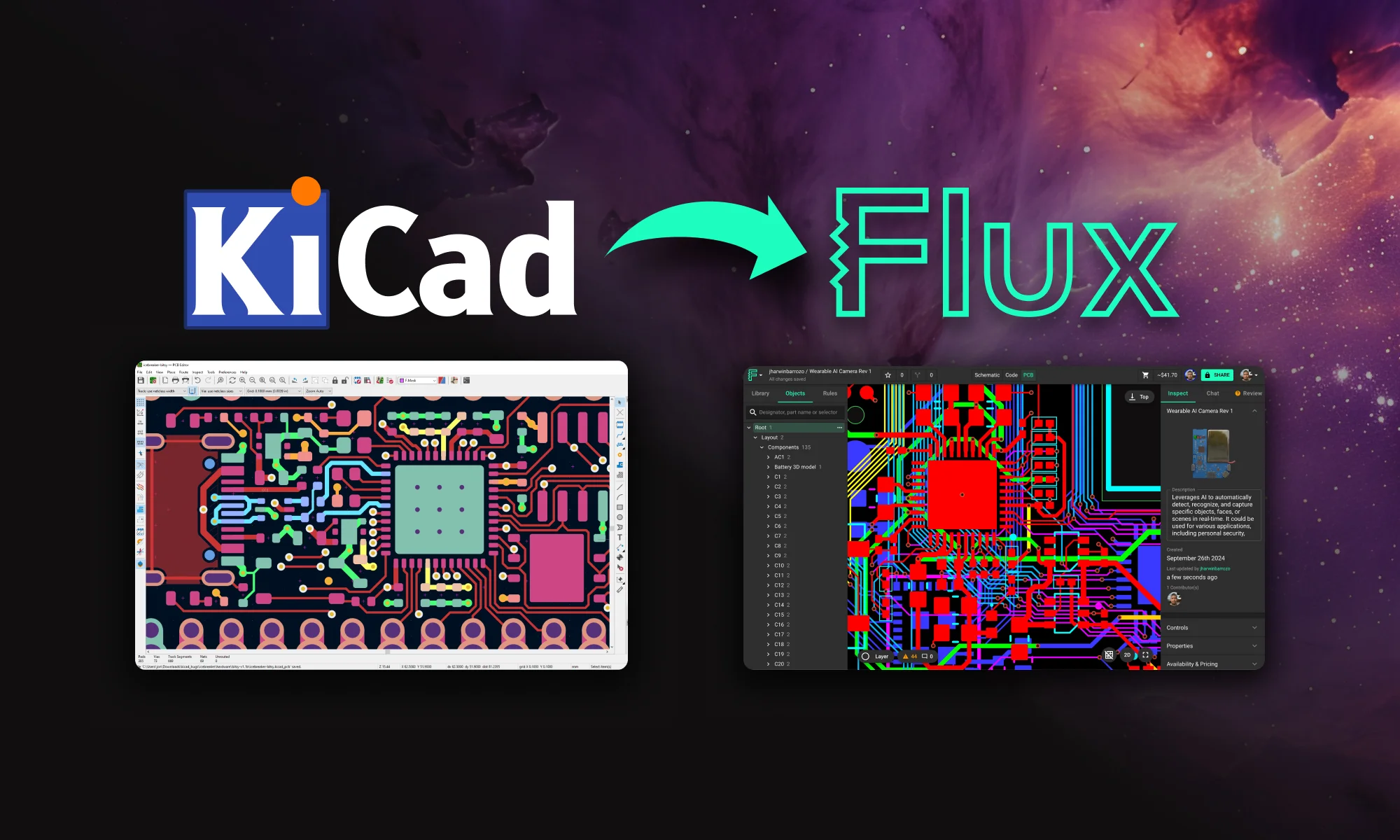
KiCad revolutionized PCB design by making it accessible to everyone. Flux builds on that foundation, offering a browser-based, AI-powered platform that takes your PCB design experience to the next level.

Learn how smart vias in Flux automates the selection, placement, and configuration of vias during the PCB design process. This automation reduces the manual effort involved in via placement and significantly lowers the risk of misalignment and other common errors associated with traditional via management.


